


Key Takeaways
- AI is transforming keyword research by focusing on semantic topics and search intent.
- Generative AI is reshaping content creation and optimization strategies.
- Voice search and conversational queries are influencing SEO practices.
- Predictive analytics powered by AI are enhancing strategic planning.
- Personalized content streams are improving user engagement and SEO performance.
Table of Contents
- Introduction
- Semantic Keyword Research
- Generative AI in Content Creation
- Voice Search Optimization
- Predictive Analytics for SEO
- Personalized Content Streams
- Conclusion
Artificial Intelligence (AI) is fundamentally reshaping the landscape of Search Engine Optimization (SEO), transforming how brands connect with audiences and compete online. As AI-powered algorithms and search tools become increasingly complex, the tactics and principles that governed traditional SEO practices are rapidly evolving. Businesses seeking to stay competitive must now think beyond keyword density and backlinks, embracing new, data-driven approaches tailored for an AI-first digital world. Companies often seek guidance and innovation from a specialized SEO company to help navigate these innovations and effectively leverage AI for higher rankings.
This AI-driven revolution impacts every stage of SEO, from content ideation to user experience. Ranking today requires holistic thinking, readiness to adopt breakthrough tools, and a clear focus on audience needs. Business leaders and marketers who understand these seismic shifts will be better equipped to capitalize on emerging opportunities and build long-term search authority.
For brands determined to accelerate growth and visibility, adapting to these new realities is no longer optional—it’s an urgent necessity. The integration of AI is not just a trend, but a cornerstone of modern digital marketing that fosters innovation, efficiency, and deeper customer connection.
Semantic Keyword Research
AI-driven SEO tools such as Google’s BERT and RankBrain have fundamentally changed how search engines understand user queries. Where traditional SEO revolved around targeting individual keywords, AI now prioritizes semantic relationships and the intent behind searches. Marketers must research entire content topics, not just standalone keywords, to address broader user intent and build topical authority. For example, producing comprehensive content around themes like “sustainable urban development” or “e-commerce SEO in North America” increases the odds of ranking for a wider network of related search terms.
This topical focus requires updating content strategies, shifting from a list of keywords to clusters of related articles and resources. The brands excelling in today’s AI-influenced search landscape often demonstrate deep subject matter expertise and create content ecosystems that serve many facets of a topic—an approach that satisfies both users and advanced search algorithms. According to Search Engine Land, investing in semantic keyword research can substantially enhance a site’s authority and its positioning in organic search.
Generative AI in Content Creation
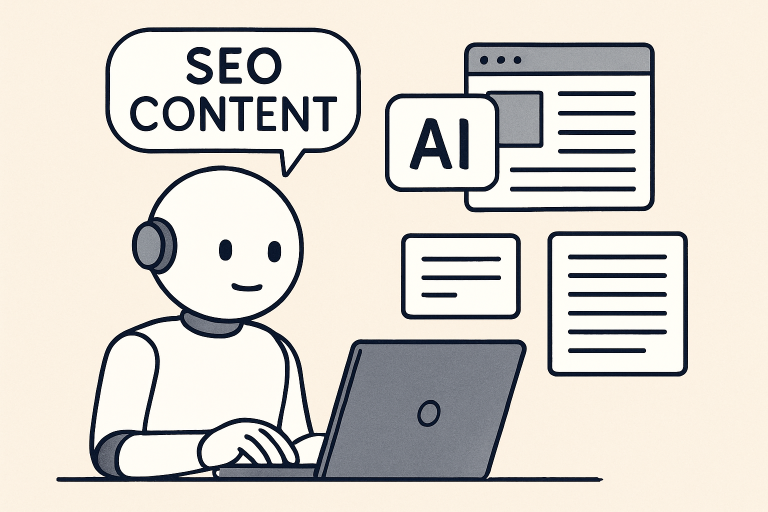
AI-powered content generators, such as GPT-4 and other natural language models, have opened new frontiers for marketing teams. Rather than spending days on single articles, businesses can now use AI to draft high-quality, relevant content at scale, accelerating the creation of editorial calendars, product descriptions, FAQs, and more. Generative AI can also fine-tune content for regional audiences, optimize for different languages, and ensure consistency across multiple platforms—empowering global SEO strategies and breaking down language barriers.
Organizations that leverage AI-generated multilingual content have reported noticeable surges in organic traffic and brand awareness in previously untapped regions. This reflects the power of AI not only to scale production but to make digital content more contextually relevant and accessible to a diverse international audience.
Voice Search Optimization
As smart speakers and mobile voice assistants become increasingly integrated into daily life, the share of voice-activated searches is skyrocketing. Unlike traditional search queries, which often rely on brief keywords, voice searches tend to be longer, more conversational, and highly specific. Optimizing for these queries means using natural, question-based language in content, structuring answers in a clear and concise manner, and prioritizing local and intent-based search.
Effective voice search SEO involves creating FAQ sections, targeting “how-to” phrases, and marking up content with structured data so search engines can easily extract relevant answers. Brands adapting quickly to this trend are more likely to capture high-intent, ready-to-convert users who use voice search to find quick information or local solutions on the go.
Predictive Analytics for SEO
AI doesn’t just help optimize existing content—it also powers forward-looking strategies. Predictive analytics utilizes algorithms to analyze patterns, forecast search demand, and identify emerging trends before they become mainstream. By using AI-driven insights to inform content calendars, marketers can anticipate what their audience will be searching for and produce content in advance, rather than reacting late to trends.
Brands integrating predictive analytics into their SEO toolkit can refine everything from seasonal campaign timing to product launches and new service pages. This proactive approach maximizes ROI and keeps businesses at the forefront of their industries, enabling them to capitalize on user interest as it peaks.
Personalized Content Streams
AI enables unprecedented levels of personalization in digital marketing. By analyzing search intent, browsing behavior, and location data, AI can customize content recommendations and user experiences for each visitor. For instance, a finance company might use AI to deliver customized blog titles, investment tips, or promotional offers based on a visitor’s industry and geographic area—leading to higher relevance, engagement, and retention.
This hyper-personalization improves time on site, click-through rates, and overall SEO performance while fostering brand loyalty. Businesses with strong content personalization see measurable uplifts in organic search results and customer satisfaction metrics.
Conclusion
The convergence of AI and SEO is changing the digital marketing playbook at every level. Marketers who adapt by embracing semantic keyword research, harnessing generative AI for consistent and scalable content, optimizing for voice-driven search experiences, leveraging predictive analytics, and delivering truly personalized content streams will future-proof their brands and drive sustainable organic growth. As search engines become increasingly intelligent, the margin for static, outdated strategies continues to shrink—making the evolution and creative adoption of AI the new imperative for digital success.
