


Table of Contents
- Renewable Energy Integration
- Urban Infrastructure
- Transportation Systems
- Data Centers
- Industrial Applications
- Healthcare Facilities
- Educational Institutions
- Future Trends
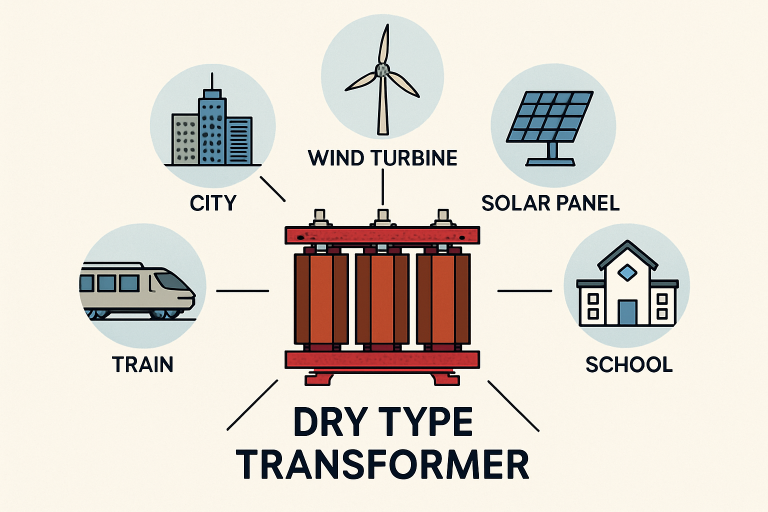
Modern infrastructure relies on technology that is safe, sustainable, and increasingly efficient. At the heart of many crucial sectors are dry type transformers, which offer flexibility and advanced safety features that make them a key component for urban development, renewable energy systems, and public utilities. These transformers stand out for their ability to operate without the hazards associated with oil-filled alternatives, reducing risks in populated and high-demand environments.
Industries and municipalities depend on dry-type transformers for consistent, reliable power delivery. Their advanced designs allow for integration in challenging spaces, such as dense cities or isolated renewable energy installations. For example, environments where potential oil leaks could pose safety or environmental issues can benefit greatly from this technology, which meets the demanding safety and efficiency standards required by modern applications.
In recent years, the rapid shift toward sustainability and the need for low-maintenance infrastructure have accelerated the adoption of dry-type transformers. These devices are not only easier to install in limited spaces but also require minimal maintenance, making them cost-effective for operators. Schools, hospitals, transportation systems, and high-tech facilities are increasingly choosing these transformers for their efficiency and safety.
As innovation continues to reshape infrastructure and energy systems, dry-type transformers are at the forefront of progress, offering scalable, adaptable solutions across industries while supporting environmental goals and regulatory requirements.
Renewable Energy Integration
Dry-type transformers are central to expanding renewable energy as part of the global transition to more sustainable power sources. These transformers excel in solar and wind applications by managing the high-frequency, harmonic-rich outputs from inverters, which are common in these systems. Their robust designs are well-suited for outdoor locations, even in coastal or remote settings, where oil containment would be difficult and environmentally risky. This adaptability supports growing investment in renewable infrastructure while streamlining integration with existing electrical grids. For further details on how renewables and grid integration are shaping global power infrastructure, visit the International Energy Agency’s overview.
Urban Infrastructure
Urban areas face unique power distribution challenges, including limited physical space and heightened safety regulations. Dry-type transformers address these challenges by offering compact, modular forms that can be installed in high-traffic or space-restricted environments. Without flammable liquids, they significantly reduce fire risks, making them preferable for multi-use buildings, high-rises, and public facilities. Their quiet operation and minimal environmental footprint make them ideal for cities that prioritize safety, sustainability, and convenience.
Transportation Systems
The electrification of public and private transport, including electric vehicle charging networks and electrified rail systems, depends on stable and adaptable power supplies. Dry-type transformers support these systems by delivering a constant voltage under varying loads and withstanding rapid demand shifts typical of charging stations and transit systems. Their resilience and reliability help transit providers and urban planners accommodate growing transportation needs while encouraging a shift away from fossil fuels. The U.S. Department of Transportation discusses national priorities for EV infrastructure, in which transformer technology plays an essential role.
Data Centers
Data centers require power distribution solutions that minimize downtime, reduce fire hazards, and support high-efficiency operation. Dry-type transformers answer these needs with advanced cooling methods, reliable performance, and ongoing monitoring capabilities. Without the risk of oil leaks, operational safety is greatly enhanced, while intelligent systems provide real-time feedback for predictive maintenance and energy management. These features enable data centers to deliver uninterrupted services and optimize energy consumption for cost savings and operational sustainability.
Industrial Applications
Manufacturing plants, processing facilities, and other industrial operations favor dry-type transformers for their durability and ability to perform in demanding environments. Their resistance to dust, chemicals, and temperature variations ensures stable operation in harsh settings, while their eco-friendly design supports broader sustainability initiatives. Lower maintenance requirements reduce operational interruptions and costs, making them an increasingly popular choice for industries seeking to balance performance with environmental responsibility.
Healthcare Facilities
Hospitals and medical centers depend on electrical infrastructure that guarantees the highest standards of safety and reliability. Dry-type transformers provide continuous power for sensitive medical equipment and critical systems, while reducing fire risks and eliminating hazardous liquids. Their dependable performance ensures that healthcare providers can deliver care without disruptions or safety concerns related to power supply, which is vital for patient health and facility compliance.
Educational Institutions
Schools, universities, and other educational environments benefit from the reliable, low-maintenance operation of dry-type transformers. Their silent, safe power distribution is ideal for learning environments, enhancing the comfort and security of students and staff. Moreover, the reduced need for ongoing maintenance helps institutions save on operational costs, freeing resources for academic programs and facility improvements.
Future Trends
The future of dry-type transformer technology lies in furthering intelligence and eco-friendliness. With advancements such as IoT-enabled monitoring and AI-driven predictive maintenance, transformers are becoming more adaptable and easier to maintain. These innovations increase transformer longevity and decrease service interruptions through real-time diagnostics and optimized performance. Improvements in materials science are also leading to more sustainable products that contribute to global climate goals. As energy demands evolve, dry-type transformers will play a decisive role in modernizing infrastructure worldwide, supporting new construction methods and smart grid integration.
Innovations in dry-type transformer design, application, and maintenance ensure they remain essential for developing safe, efficient, and sustainable infrastructure. As these technologies advance, they offer compelling solutions to meet the growing demands of urbanization, digital transformation, and environmental stewardship.
