


Key Takeaways
- Traditional 60/40 portfolios are being reevaluated amid market volatility.
- Incorporating alternative assets can enhance diversification and returns.
- Regular portfolio rebalancing is crucial to maintain desired risk levels.
Table of Contents
- Rethinking the 60/40 Portfolio
- Incorporating Alternative Assets
- Importance of Regular Rebalancing
- Sector Rotation Strategies
- Leveraging Technology in Portfolio Management
- Final Thoughts
Retirement planning in 2026 demands a more strategic, adaptive approach than ever before. With rapid shifts in global economics, market dynamics, and investor sentiment, both retirees and those nearing retirement face new challenges and opportunities. Determining the right blend of stocks and bonds remains a top concern for most, which is why understanding how to balance stocks and bonds in retirement is essential. For those looking for practical strategies, retirement fundamentals offers actionable guidance. As investment environments continue to change, understanding how to construct and maintain a resilient portfolio is critical to long-term financial well-being.
Market volatility, inflation trends, and the growing diversity of investment options have made traditional models less effective. Investors are shifting towards approaches that can offer stability without sacrificing potential growth. By exploring innovative portfolio mixes and employing new management techniques, today’s retirees can navigate uncertain markets with greater confidence.
As retirees seek to preserve wealth and generate income, it is vital to frequently revisit asset allocation and ensure that financial goals stay aligned with evolving risks. A strong retirement portfolio not only manages risk but also leverages forward-looking investment strategies.
Rethinking the 60/40 Portfolio
The time-honored 60% equities and 40% fixed income model has served as the gold standard for balanced portfolios. In recent years, increased economic uncertainty and higher inflation have led financial institutions and experts to reconsider this formula. Vanguard, one of the largest asset managers, has proposed a more conservative split with 40% in equities and 60% in fixed income for some investors, especially those in or near retirement. This recommendation is a direct response to persistent volatility in equity markets and forecasts for moderation in real returns from both stocks and bonds. Their guidance reflects a broader trend toward emphasizing capital preservation and predictable income.
Despite these shifts, it is important not to overlook the growth potential of equities, especially given that people are living longer and may face decades in retirement. The key is to customize the allocation based on risk tolerance, time horizon, and overall wealth goals, rather than applying a static formula.
Incorporating Alternative Assets
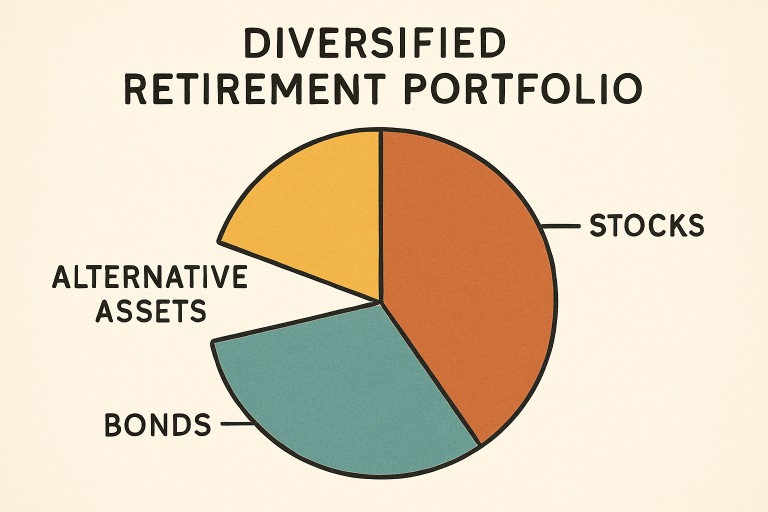
To address the shortcomings of traditional portfolios, more retirees are adding alternative assets such as private equity, private credit, and infrastructure investments. According to BlackRock’s Chief Investment Officer, Rick McCorry, a diversified portfolio in today’s climate might include 70% equities, 15% fixed income, and 15% hedge funds to buffer against bear markets and market shocks. These alternatives have lower correlation with stocks and bonds and can help smooth out volatility over time. This approach recognizes the importance of flexibility and the value of non-traditional asset classes in a rapidly changing landscape.
Investors can also consider real estate investment trusts, commodities, or Treasury Inflation-Protected Securities (TIPS) as part of their inflation-hedging strategy. Ultimately, building resilience into the retirement portfolio means looking beyond the standard stock-and-bond mix and actively seeking alternative drivers of return.
Importance of Regular Rebalancing
Even the best-designed portfolios drift from their intended allocations over time. Asset prices can rise or fall quickly, making portfolios riskier or more conservative than the investor originally intended. Regular rebalancing is the process of periodically selling some assets and purchasing others to restore the original allocation. This discipline helps retirees avoid unintended risk and capture gains from assets that have outperformed. For example, when equities have a strong run, selling a portion and reinvesting in fixed income or alternative assets can lock in profits while lowering overall portfolio risk. Most financial advisors recommend reviewing allocations at least once, and preferably twice, a year, especially after significant market movements.
Benefits of Scheduled Reviews
Besides risk control, rebalancing offers behavioral benefits. It encourages investors to buy low and sell high, countering emotional responses that can lead to chasing returns or panic selling during downturns. Automated rebalancing tools or model portfolios can help streamline this process, making it easier for retirees to stay disciplined and focused on long-term goals.
Sector Rotation Strategies
Dynamic sector rotation has gained attention as a way to adapt portfolios to current economic trends. Certain sectors, like technology, healthcare, and infrastructure, often outperform during periods of economic transition. T. Rowe Price has observed that advancements in artificial intelligence, sustainability initiatives, and increased government infrastructure spending are shifting the outlook for some sectors. Investors who regularly assess macroeconomic data and adjust sector exposures accordingly can find opportunities to boost returns or reduce downside risk. While effective, this strategy does require ongoing research and a proactive mindset.
Long-term investors should use sector rotation as a complementary tactic, not a speculative timing strategy. The goal is to tilt allocations modestly toward sectors with strong momentum or favorable outlooks, while maintaining core exposure to broad indices for diversification.
Leveraging Technology in Portfolio Management
Innovations in deep learning and artificial intelligence are revolutionizing portfolio management. These technologies can rapidly analyze massive data sets, uncover inefficiencies, and identify potential risks or opportunities that human analysts might overlook. Algorithm-driven portfolio optimization tools are now accessible not only to institutional investors but also to everyday retirees. A recent study on integrating deep learning into investment management demonstrates how machine learning models can improve asset allocation and enhance returns while controlling for risk.
Technology also simplifies monitoring and rebalancing through automated solutions and digital dashboards, empowering investors to act faster as conditions change. Using advanced software, retirees can set their risk parameters, track real-time asset performance, and make informed adjustments, all from a computer or mobile device.
Final Thoughts
Successfully navigating retirement in 2026 requires more than sticking with yesterday’s portfolio formulas. By taking a proactive approach, customizing the traditional 60/40 mix, incorporating alternative assets, maintaining strict rebalancing routines, employing sector rotation, and adopting the latest technology, retirees can enhance both safety and growth prospects. As financial markets evolve, so must your retirement strategy. Remaining nimble and informed will help ensure sustained financial stability and a more secure future.
